Health and Safety Policy for Cleaners SW19
 Our health and safety policy for cleaners SW19 is designed to support safe, consistent, and professional cleaning work in homes, offices, and shared premises. It sets out the standards expected from every cleaner, with a focus on preventing accidents, reducing risks, and protecting the wellbeing of staff, clients, and anyone affected by cleaning activity. This policy applies to all routine cleaning duties, specialist tasks, and occasional work where hazards may be present.
We believe safe work starts with clear planning, suitable equipment, and careful attention to the environment in which cleaning takes place. Every cleaner in SW19 is expected to follow safe methods, report concerns promptly, and use materials correctly. The aim is to maintain a clean property without creating unnecessary danger, disruption, or damage.
 This policy is also intended to promote responsibility at every stage of the cleaning process. Whether carrying out domestic cleaning, communal area maintenance, or end-of-tenancy tasks, our team must work in a way that protects health, respects the property, and follows established procedures. Safety is not treated as an afterthought; it is part of the job from the moment a task is planned.
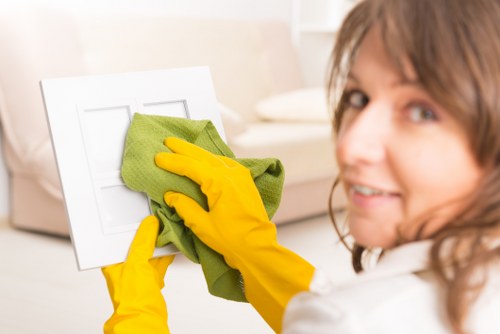
All cleaning staff must complete basic safety awareness before undertaking work independently. This includes understanding how to handle cleaning chemicals, move equipment safely, avoid slips and trips, and recognise hazards such as wet floors, electrical items, broken glass, or unstable surfaces. The correct use of personal protective equipment, including gloves and where needed face coverings or eye protection, is required for tasks that present a risk.
Cleaning products must be stored, handled, and diluted according to instructions. Never mix chemicals unless specifically authorised, as this may create harmful fumes or reactions. Labels should be checked before use, and containers must be kept closed when not in use. If a product causes irritation, discomfort, or a suspected reaction, work must stop and the issue must be reported immediately.
 Equipment safety is equally important. Mops, vacuums, cloths, buckets, and extension tools should be checked before use to ensure they are clean, in good condition, and suitable for the task. Faulty items should not be used. Cables must be managed to avoid trips, and electrical cleaning equipment should only be used in safe, dry conditions when appropriate. Where lifting or carrying is required, cleaners should use sensible posture, avoid overloading, and ask for assistance with heavy items.
Risk assessment is a key part of our approach. Before starting work, cleaners should identify anything that could cause harm and decide how to reduce that risk. This may include securing access to a room, warning others about wet floors, checking for pets or vulnerable items, and confirming whether any areas should not be entered. For more complex tasks, a more detailed assessment may be required.
Our SW19 cleaning team must also pay close attention to hygiene and infection control. Hands should be washed regularly, especially after removing gloves, handling waste, or cleaning shared surfaces. Disposable items should be used where suitable, and waste must be separated and disposed of responsibly. If contamination is suspected, cleaning methods should be adapted to reduce the spread of dirt or germs.
Special care is needed when working around children, older adults, or people with health conditions. In these situations, the cleaner should avoid leaving products unattended, ensure floors are not left slippery, and maintain respectful communication throughout the visit. Health and safety for cleaners SW19 includes not only physical safety, but also the duty to work considerately and professionally in occupied spaces.
Training and supervision help maintain consistent standards. New staff should receive clear instructions on safe working practices, correct product use, emergency procedures, and the reporting of incidents or near misses. Refresher training should be provided when work methods change or when new equipment or substances are introduced. Supervisors should monitor compliance and support improvement where needed.
Accident prevention is central to every cleaning assignment. Common hazards such as spills, clutter, poor lighting, uneven flooring, and open doors should be addressed as soon as they are noticed. If a property contains unsafe conditions beyond the cleaner’s control, the work should pause until the risk is reduced or the task can be completed safely. No cleaning job is so urgent that it justifies ignoring a clear danger.
 Emergency preparedness is also part of this policy. Cleaners should know what to do if a fire alarm sounds, if someone is injured, or if a chemical is splashed into the eyes or onto the skin. Basic first aid awareness and incident reporting procedures must be understood by all staff. Emergency exits must never be blocked, and equipment should be left in a way that does not delay evacuation.
We expect every cleaner to take personal responsibility for safe conduct while remaining alert to the wider working environment. This means wearing suitable footwear, staying aware of surroundings, avoiding rushed movements, and not using shortcuts that compromise safety. It also means being honest about limitations, such as fatigue, illness, or lack of familiarity with a task, and raising these concerns before work begins.
Clients and property occupants also play a role in safe cleaning arrangements. Areas should be made accessible where possible, valuable or fragile items should be identified in advance, and any known hazards should be shared. A cooperative approach helps cleaners work efficiently while reducing the chance of accidents, damage, or confusion. Clear communication is part of good practice and supports a safer result for everyone.
 This cleaning policy for SW19 is reviewed regularly to keep it practical, current, and aligned with safe working standards. By following these principles, our cleaners can deliver reliable results while protecting themselves and others. Safe working is a core value, and every task should be completed with care, attention, and respect for health and wellbeing.